Chapter 5 · Official guide pp. 33–37
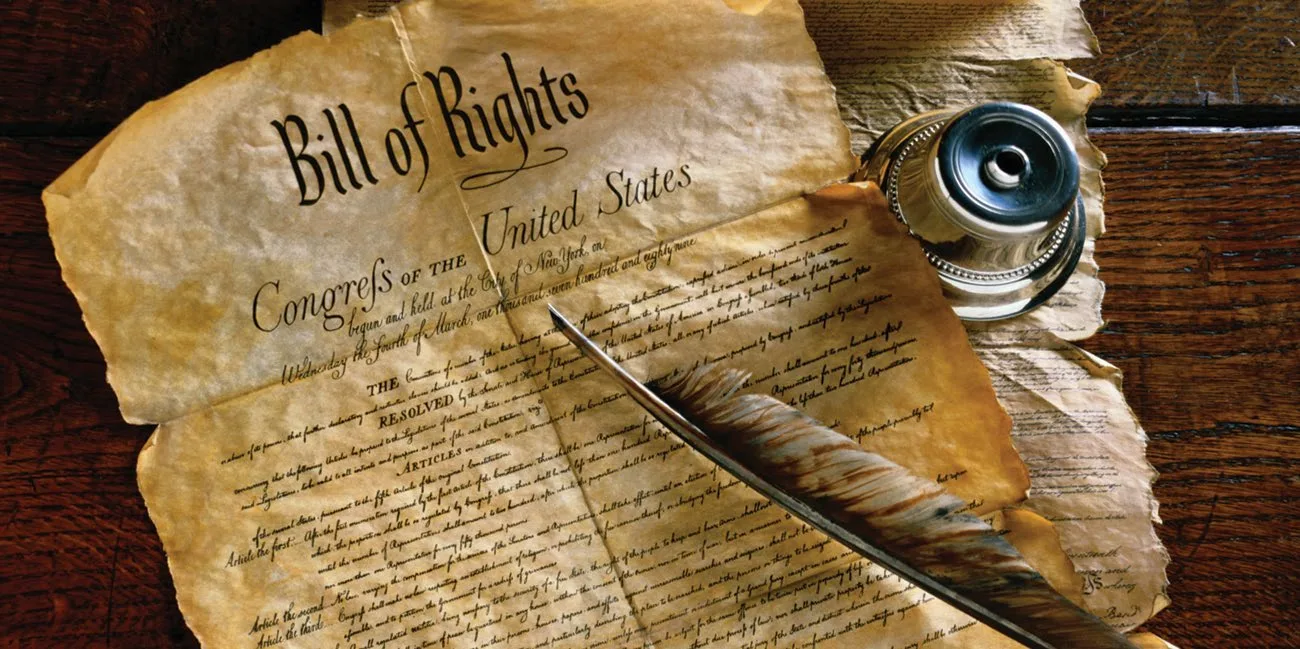
The Bill of Rights is the first ten amendments. It protects freedoms such as speech, religion, assembly, and petitioning the government.
Rights and responsibilities in practice
Many constitutional freedoms apply to everyone in the United States. Voting in federal elections, running for federal office, and serving on a jury are reserved for U.S. citizens. People also participate by contacting officials, volunteering, and paying taxes as required.
The Oath of Allegiance
New citizens make promises that include supporting the Constitution and being loyal to the United States.
Say the answer aloud
What does the Bill of Rights protect?
- (The basic) rights of Americans
- (The basic) rights of people living in the United States
Who can vote in federal elections, run for federal office, and serve on a jury in the United States?
- Citizens
- Citizens of the United States
- U.S. citizens
What are three rights of everyone living in the United States?
Give 3 answers or parts.
- Freedom of expression
- Freedom of speech
- Freedom of assembly
- Freedom to petition the government
- Freedom of religion
- The right to bear arms
Use official information for your case
This independent guide is for education and test preparation. Confirm test rules, forms, appointments and changing answers with U.S. Citizenship and Immigration Services. This website does not provide legal advice.
Last reviewed: August 10, 2026